
Culture & Community
The Space Problem Nobody Talks About
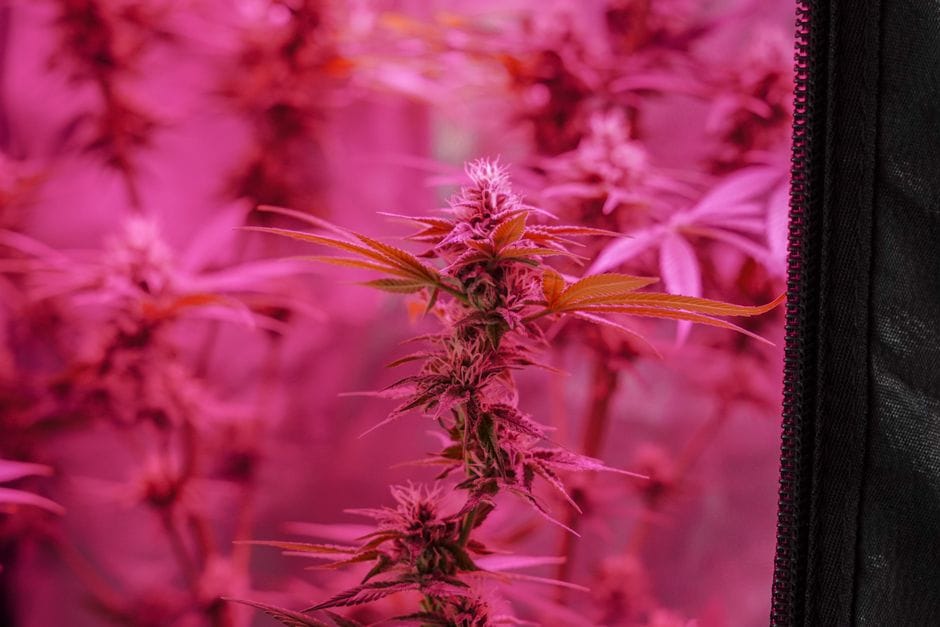
Walk into almost any indoor growing setup — whether a purpose-built tent or a converted spare room — and you will find the same quiet inefficiency at work. The light is on. The plants are growing. But much of what happens below the canopy's top few centimetres is, from a yield perspective, largely wasted effort.
This is not a failure of effort or investment. It is, more often than not, a geometry problem. And it is one that applies just as much to a home cultivator in Żejtun as it does to a hobbyist grower in Amsterdam or Barcelona.
In Malta, where the law permits individuals aged eighteen and over to grow up to four cannabis plants for personal use, the question of how to grow well within modest domestic spaces has become increasingly relevant. CHRAs across the island have reported growing member interest not just in obtaining cannabis, but in understanding cultivation — part of a broader cultural shift toward informed, responsible use that sits at the heart of what the 2021 reform was intended to encourage.
Light Is Everything — But Distance Is the Detail
The single most important variable in an indoor grow is not the genetics of the plant or the quality of the soil. It is light — specifically, how consistently and evenly light reaches every productive part of the plant.
As a general rule, a sodium (HPS) lamp should be kept approximately fifty centimetres from the plant canopy during flowering; LED setups can be brought slightly closer, to around forty centimetres. These figures are widely cited in cultivation literature and serve as a practical starting point, though growers should always consult the specific guidance for their equipment.
The problem, as experienced growers will recognise immediately, is that "forty to fifty centimetres from the plant" means from all of the plant — not just the topmost bud site. A cannabis plant left to grow freely indoors can easily reach a metre in height or more. If the light is positioned correctly for the main cola at the top, everything below is receiving a fraction of the necessary intensity. The lower buds develop poorly. The yield suffers. And the grower, understandably, wonders what went wrong.
The Logic of Canopy Management
The solution is not simply to cram more plants into a space, or to invest in more powerful equipment. It is to reshape how plants occupy the space they are given — ensuring that as much of the plant's surface area as possible sits within the optimal light zone.
Two broad strategies dominate here. The first involves growing a larger number of smaller plants — a method commonly known as Sea of Green, or SOG. In a space roughly one metre wide by sixty centimetres deep, for instance, it is feasible to flower around eighteen small plants in four- or five-litre pots. Kept short, each plant's canopy sits close to the light source, and the overall yield across the group can be substantial.
The second approach is to grow fewer, larger plants and train them to spread horizontally rather than reach vertically. This requires more hands-on involvement but rewards the grower with a dense, even canopy across the available floor space.
Low Stress Training: A Technique Worth Knowing
Of the various training methods available to indoor cultivators, Low Stress Training — universally abbreviated to LST — is among the most accessible for those new to the practice. It requires no specialist tools, carries minimal risk to the plant, and produces measurable results.
The principle is straightforward: as the plant grows, its branches are gently bent and tied down to the edge of the pot or to stakes, guiding the plant outward rather than upward. Over time, this exposes a much greater surface area of the plant to direct light. More light-exposed bud sites means more flowering sites, and ultimately, a better harvest from the same lamp and the same floor space.
The key word in LST is low stress. The goal is to guide the plant, not to strain it. Ties should be firm enough to hold the branch in position but never so tight that they cut into the stem — which will continue to thicken as the plant matures. Checking and adjusting ties regularly is part of the process.
"The biggest misconception is that more plants automatically means more yield. What matters is how intelligently you use the space and light you already have."
What This Means for Maltese Home Growers
Malta's climate is genuinely well-suited to outdoor cultivation for much of the year, and many home growers take advantage of a terrace or courtyard during the warmer months. But the island's summers can be punishing, and the window for outdoor flowering is not always as forgiving as it might appear on a calendar. Indoor growing offers control — over temperature, humidity, light cycle, and timing — that outdoor growing cannot.
For those operating within the four-plant personal limit, optimising an indoor space is not an academic exercise. It is the practical difference between a harvest that meets personal needs and one that falls short. CHRAs, which exist in part to support members with harm reduction information and cultivation guidance, are well-placed to share this kind of practical knowledge — and many already do, informally, through member education and peer exchange.
As Malta's cannabis culture continues to mature, the quality of that community knowledge matters. Growing well — efficiently, responsibly, and with an understanding of the science involved — is part of what distinguishes a culture of informed use from one driven purely by novelty.
Sources
Revista THC, "Más flores en menos espacio: cómo aprovechar tu indoor al máximo": https://revistathc.com/mas-flores-en-menos-espacio-como-aprovechar-tu-indoor-al-maximo/
Featured image: Photo by Juan Miguel Restrepo Barrera on Pexels
Members Discussion